One of the questions we receive most often is whether foreigners can legally purchase property in Aruba. The answer is simple: yes. Unlike many Caribbean destinations, Aruba places very few restrictions on foreign ownership. Whether you live in the United States, Canada, Europe, South America or elsewhere, you can generally purchase, own, rent and later sell residential real estate under the same legal framework as an Aruban citizen.
That openness — combined with Aruba's political stability, strong tourism industry and well-established legal system — has made the island one of the Caribbean's most attractive destinations for second homes, retirement properties and real estate investment. This guide explains everything international buyers should know before purchasing property in Aruba.
Can foreigners buy property in Aruba?
Yes. Foreign nationals can purchase residential property in Aruba without obtaining special government approval or an investment permit. Unlike several Caribbean jurisdictions, Aruba does not require foreign buyers to obtain an Alien Landholding License, invest a minimum amount, or become residents before purchasing property.
Whether you're buying a condominium, villa, townhouse or vacant parcel of land, the legal ownership process is essentially the same for both local and international buyers. Ownership is registered through Aruba's public Land Registry by an independent civil-law notary, giving buyers a secure and transparent ownership system.
Do you need residency?
No. Owning property and obtaining residency are two completely separate matters. Many people own vacation homes in Aruba while remaining residents of another country — they simply visit whenever they choose, subject to the immigration rules that apply to their nationality.
If you eventually decide to relocate permanently, residency applications are handled separately through the appropriate government authorities. Property ownership may strengthen certain applications, but purchasing a home does not automatically grant residency or citizenship.
Property land vs lease land (erfpacht)
One of the first concepts every foreign buyer should understand is the difference between property land and lease land (erfpacht). With property land, you own both the land and the improvements permanently. With lease land, the government owns the land while you own the improvements built upon it. The land is leased for a long period — often several decades — and is generally renewable. Owners pay an annual ground rent, known locally as the canon.
Lease land is common in several desirable areas of Aruba, including parts of Noord, Palm Beach, Eagle Beach, Malmok and Tierra del Sol. Contrary to what many international buyers initially believe, lease land is not considered unusual or unsafe in Aruba. The important consideration is understanding the remaining lease term, the annual canon and the renewal status before purchasing. Your real estate agent and notary will verify these details during the transaction — see our taxes & fees guide for more.
How the buying process works
Buying property in Aruba is relatively straightforward. After selecting a property, buyer and seller negotiate the purchase price and terms. Once agreement is reached, both parties sign a Purchase Agreement outlining the conditions of the sale.
The civil-law notary then performs legal due diligence — verifying ownership, confirming the property can legally be transferred, checking for mortgages or other encumbrances, and preparing the deed of transfer. Once all contractual conditions are satisfied, the buyer transfers the remaining purchase funds, signs the deed, and the notary registers the transfer with the Land Registry. Upon registration, legal ownership passes to the buyer. Most resale transactions complete within approximately four to eight weeks, although financing and government procedures may occasionally extend this. Our step-by-step buying guide covers each stage in detail.
Can foreign buyers obtain financing?
Yes, although many international buyers purchase with cash. Several local banks offer mortgage financing to non-residents, subject to their lending criteria. Foreign buyers are generally expected to make a larger down payment than local purchasers, and lenders require documentation demonstrating income, assets and the source of funds.
Because lending policies vary between institutions and individual circumstances, buyers who require financing are encouraged to discuss their options with a local bank before beginning their property search. Obtaining mortgage pre-approval allows buyers to negotiate with confidence and helps avoid delays once an offer has been accepted.
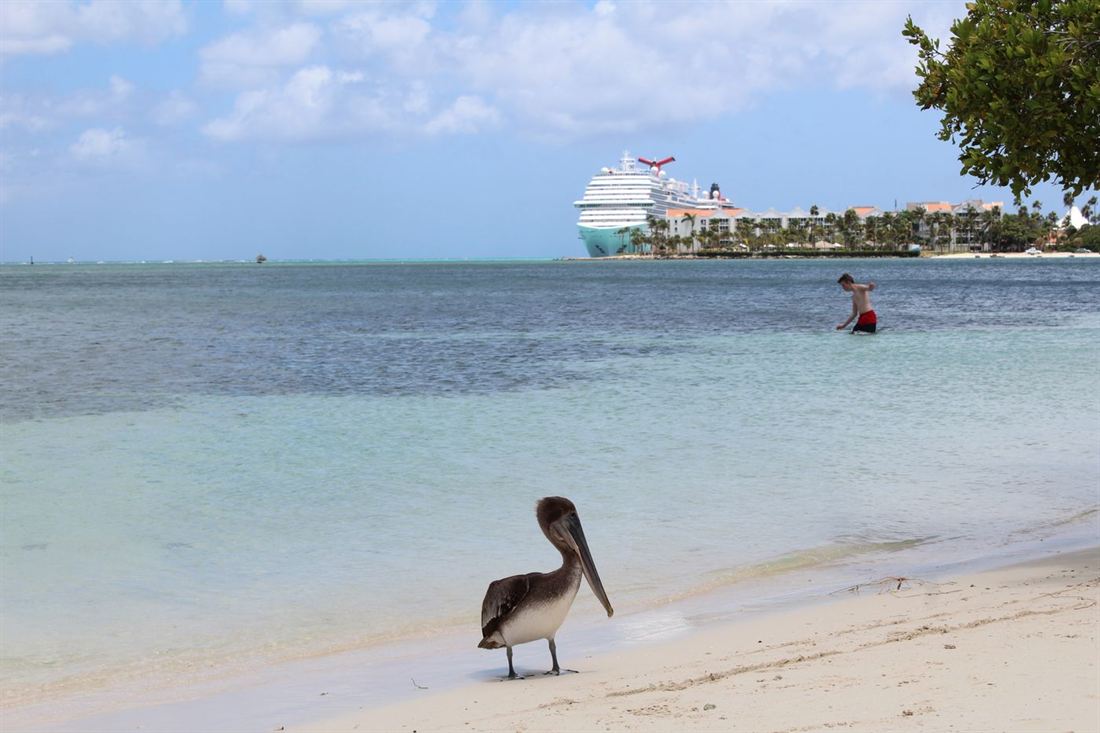
Buying property remotely
Many international buyers complete their entire purchase without travelling to Aruba until after closing. Modern technology makes remote transactions remarkably straightforward: properties can be viewed through live video tours, detailed photography, drone footage and Matterport virtual walkthroughs. Purchase documents can often be signed electronically where legally permitted, and buyers who cannot attend closing may authorize a representative through a notarized Power of Attorney. Purchase funds are transferred directly into the notary's escrow account, providing security for both buyer and seller throughout the transaction.
What documents will you need?
Before closing, buyers should expect to provide documentation allowing the notary and, where applicable, the financing bank to satisfy Aruba's anti-money-laundering and Know Your Customer requirements. Most buyers will need a valid passport, proof of residential address, documentation demonstrating the source of their funds, banking information for the transfer of purchase monies, and — if financing is involved — the relevant financial documentation required by the lender. If purchasing through a company, additional corporate documents are required. Although exact requirements vary, your notary will provide a detailed checklist before closing.
Taxes and ownership costs
In addition to the purchase price, buyers should budget for transfer taxes, notary fees, registration costs, annual property taxes, HOA fees, insurance and — where applicable — annual lease land payments. As a practical guideline, reserve approximately 6.5% to 8% of the purchase price to cover acquisition costs. Compared with many international destinations, Aruba offers a relatively predictable and transparent cost structure. See our full cost breakdown.
Personal or company ownership?
The majority of foreign buyers purchase residential property in their personal names. However, investors purchasing multiple properties or individuals considering estate-planning strategies sometimes choose to acquire real estate through a corporate entity. While company ownership may offer advantages in certain situations, it also introduces additional accounting, legal and administrative obligations. For most second-home buyers, personal ownership remains the simplest and most practical solution. A local notary or tax advisor can explain which structure best suits your circumstances.
Selling your property later
Buying property is only part of the investment — understanding the eventual exit strategy is equally important. One of Aruba's advantages is that private individuals generally do not pay capital gains tax in Aruba when selling residential real estate. In addition, Aruba maintains a stable financial system with a currency pegged to the U.S. dollar, providing certainty for many international buyers.
When the time comes to sell, your property can be marketed to both local and international purchasers, and the transaction completes through the same independent notarial system used when you bought. Remember, however, that although Aruba may not tax capital gains, your country of residence may tax worldwide income or gains — so always obtain professional tax advice before purchasing.
Common mistakes foreign buyers make
Most transactions proceed smoothly, but a few mistakes occur repeatedly. Many buyers focus exclusively on the purchase price without considering acquisition costs, annual HOA fees or insurance. Others fail to understand the difference between property land and lease land before making an offer.
Some investors assume every condominium permits short-term vacation rentals, only to discover that individual HOA rules restrict rental activity. Others overlook the importance of independent representation, forgetting that the notary's role is to protect the legality of the transaction rather than negotiate on the buyer's behalf. Finally, international buyers sometimes overlook the tax implications in their own country — while Aruba offers an attractive tax environment, owners may still have reporting or taxation obligations where they reside.
Thinking of buying from abroad?
We guide international buyers through every step — virtual tours, offers, notary and closing — in four languages. Tell us what you're looking for.
Talk to usFrequently asked questions
Can Americans buy property in Aruba?
Yes. US citizens — and other foreign nationals — can buy residential property in Aruba with the same rights as Aruban citizens. No special permit, minimum investment or residency is required.
Do you need residency to buy property in Aruba?
No. Ownership and residency are separate. You can own a home in Aruba while remaining a resident of another country, visiting under the immigration rules for your nationality.
Can foreigners get a mortgage in Aruba?
Yes — several local banks lend to non-residents, typically with a larger down payment and full documentation of income and source of funds. Many foreign buyers pay cash.
Can I buy property in Aruba remotely?
Yes. Viewings can be virtual, documents can often be signed electronically, and the notary can act on a notarized Power of Attorney — so many buyers complete the purchase without traveling until after closing.
Is lease land safe for foreign buyers?
Yes. Lease land (erfpacht) is common and not considered unusual in Aruba — the government owns the land, you own the building, and you pay an annual canon on a long, renewable lease. Just confirm the remaining term and canon before buying.
Can Canadians buy property in Aruba?
Yes. Canadian citizens buy property in Aruba under the same open rules as everyone else: full ownership rights, no residency requirement and no special permit. The purchase runs through a civil-law notary, closing costs add roughly 6.5–8% on top of the price, and you can choose between property land (full freehold ownership) and long-lease land (erfpacht). Many Canadian owners split the year between Canada and Aruba, and the entire purchase can be completed remotely through a Power of Attorney.
Can foreigners buy land in Aruba and build on it?
Yes. The same open rules apply to land: no nationality restrictions and no residency requirement. The key check is the land type. Property land (freehold) is owned outright, while government lease land (erfpacht) carries an annual canon and a lease term to verify. Building requires local permits, and construction costs and timelines vary, so budget from local quotes rather than overseas assumptions.